Pocket Silicon earns qualifying commissions from merchant links across this page at no extra cost to you. How Pocket Silicon earns affiliate revenue
Anbernic’s retro gaming lineup moves fast. Between classic clamshells, horizontal commuter slabs, and square-screen novelties, picking the right device often comes down to three practical questions: What shape fits your pockets? Do you want plug-and-play Linux or flexible Android? And what tier of hardware power do your favorite systems actually require?
Rather than wading through confusing model codes, this guide breaks down the core distinctions among current Anbernic handheld consoles based on verified manufacturer listings and published specifications.
- For low-maintenance 8-bit to 32-bit classics: A 64-bit Linux device (like the RG35XX H or RG40XX H) offers an immediate, boot-and-play environment without touchscreen setup.
- For higher-end processing and app streaming: Android-powered units with dedicated processors (such as the Unisoc T820-powered RG 476H) deliver modern touchscreen interfaces and game-streaming capability.
- For on-the-go pocket protection: Clamshell builds (like the RGSP) shield the screen inside a pocket or backpack without requiring a separate carrying pouch.
The Core Choices: Linux Simplicity vs. Android Flexibility
Before looking at screen shapes, the primary divider across Anbernic's catalog is the operating system environment.
64-bit Linux Consoles
Models running dedicated 64-bit Linux distributions (such as the RGSP, RG35XX H, RG40XX H, and RG Cubexx) prioritize dedicated gaming frontends. You power on the machine, browse your library through an organized menu, and launch directly into an emulator. These units boot quickly and do away with Android touchscreen navigation or mobile multitasking overhead, making them ideal for distraction-free retro sessions on a daily commute.
Android Consoles
Devices equipped with Android (such as the RG 476H with Android 13) behave more like specialized gaming smartphones with integrated controls. They provide touch support, native Android gaming apps, cloud streaming clients, and wide compatibility with standalone emulator apps. The tradeoff is setup complexity: you will spend more time in configuration menus, mapping controls, and managing operating system updates compared to fixed-firmware Linux builds.
Popular Anbernic Models Compared
The models below illustrate how Anbernic pairs different displays, battery capacities, and operating systems across their lineup.
1. High-Performance Android: Anbernic RG 476H
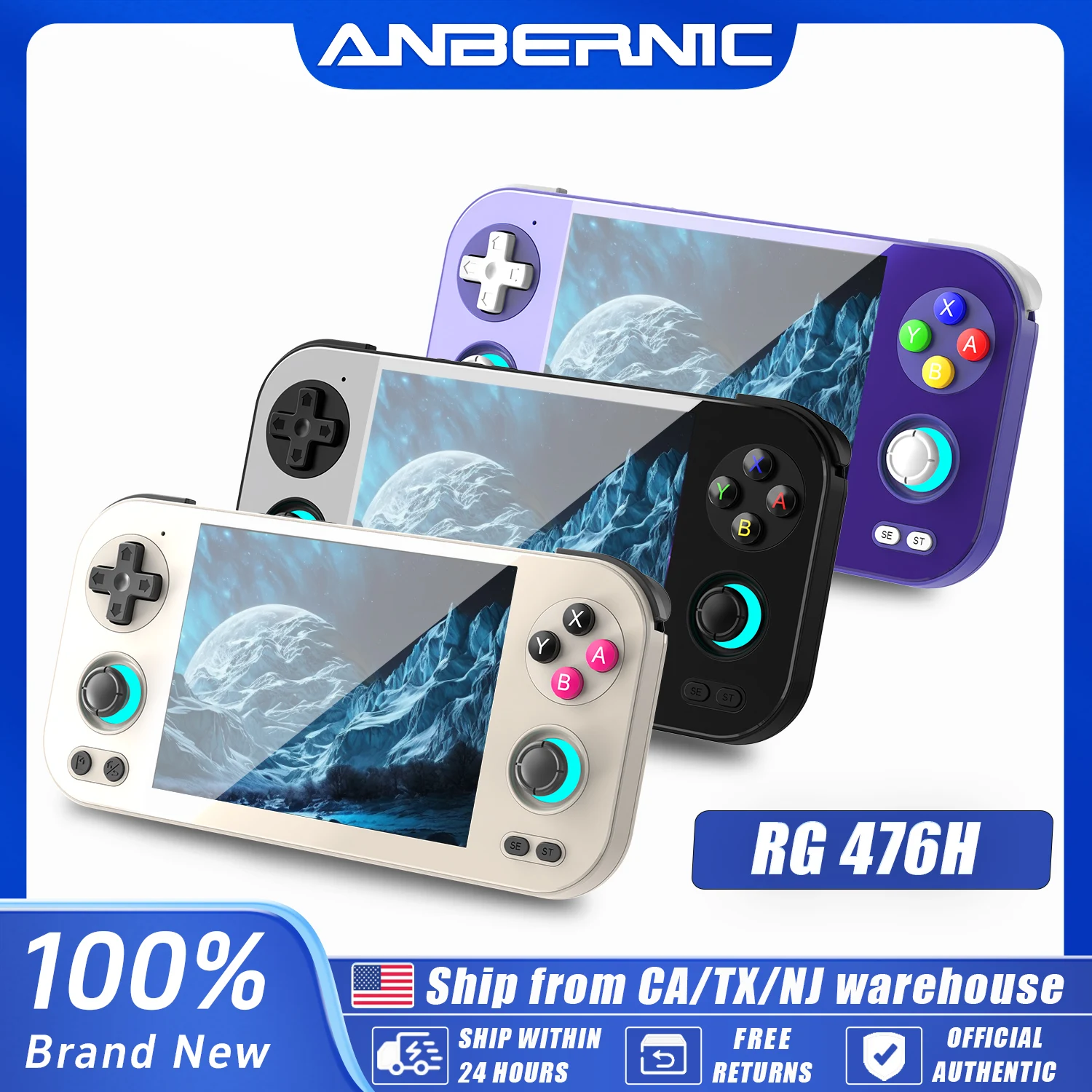
For players who want larger display real estate and higher processing overhead, the RG 476H stands apart. Stated listing specifications highlight a 4.7-inch LTPS in-cell display paired with Android 13 and a Unisoc T820 processor. It is advertised with streaming capabilities, catering to users who want a hybrid retro and modern mobile handheld.
2. The Clamshell Commuter: Anbernic RGSP
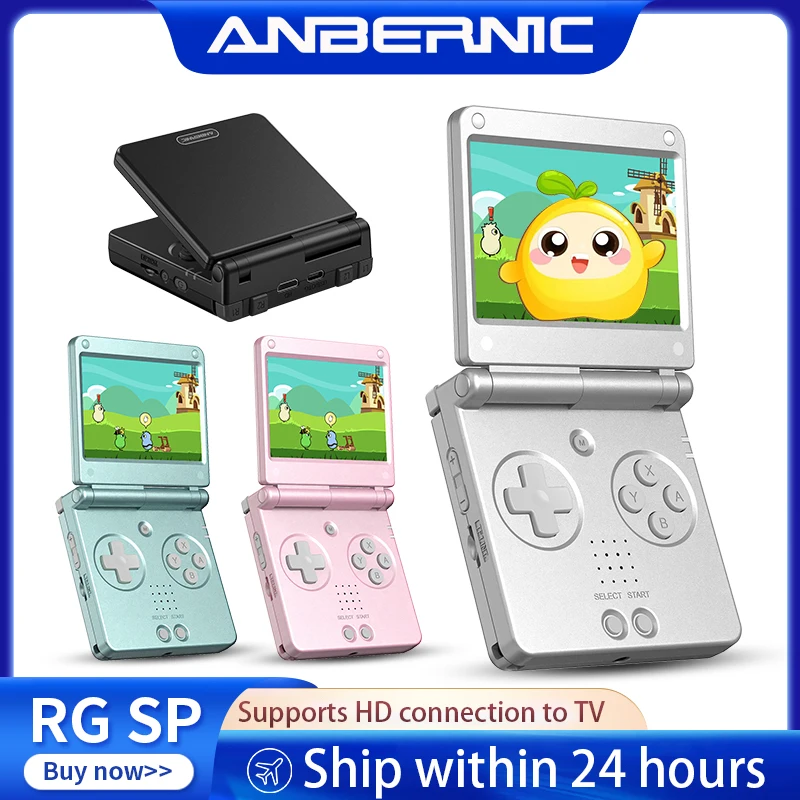
The RGSP borrows the classic flip-top folding design. Powered by a 64-bit Linux build, it features an advertised 3300mAh battery alongside Wi-Fi streaming support. The folding chassis naturally protects the screen from keys and coins, making it the most rugged choice for tossing directly into a coat pocket.
3. The Traditional Horizontal Slab: Anbernic RG35XX H
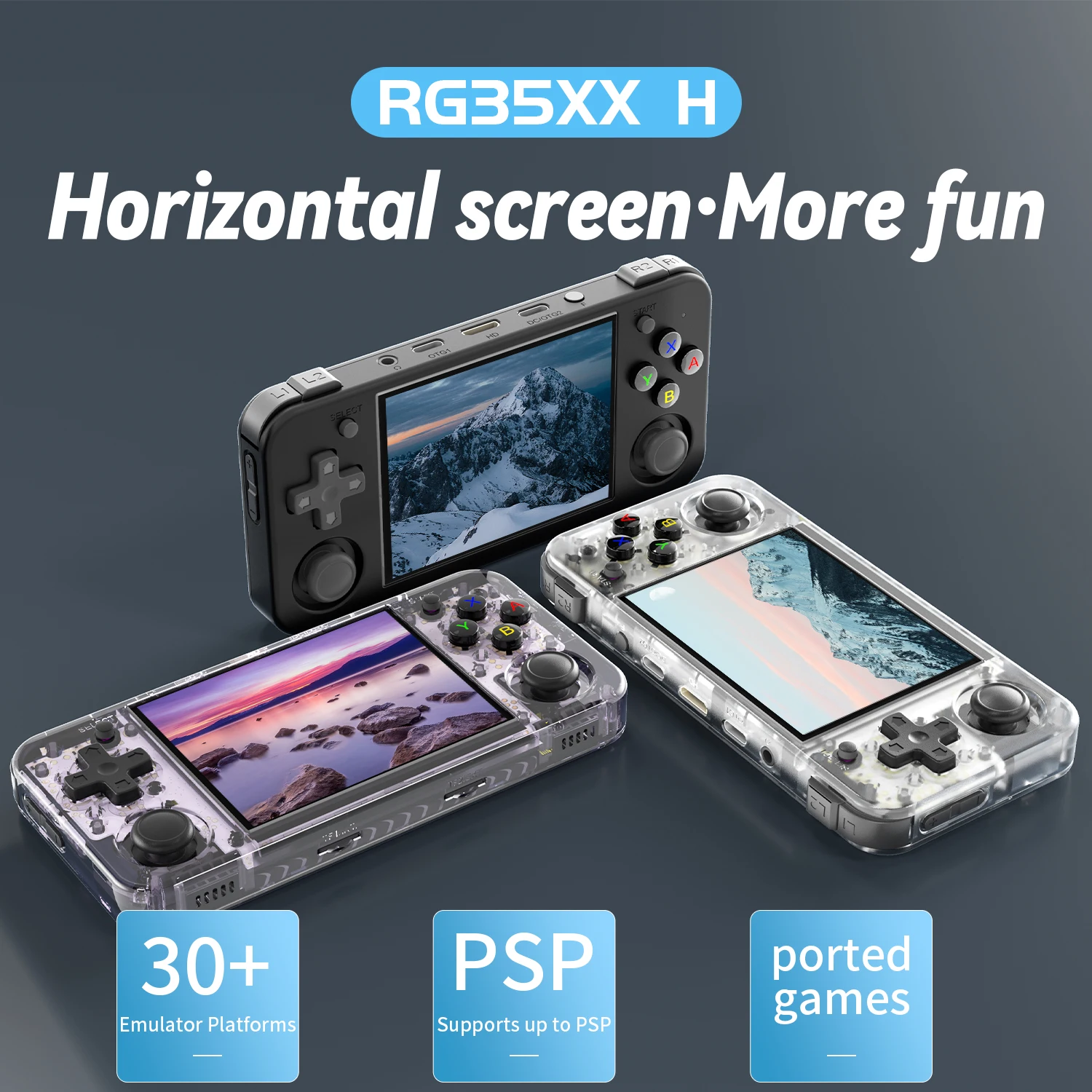
The RG35XX H is Anbernic's straightforward horizontal staple. Advertised with an Allwinner H700 quad-core processor, a 3.5-inch IPS display, and a 3300mAh battery, it runs a 64-bit Linux interface designed for classic emulation. Its compact footprint makes it a dependable entry point for general retro gaming up through PlayStation 1 and similar vintage systems.
4. The 1:1 Aspect Ratio Specialist: Anbernic RG Cubexx
Not every retro console was designed for standard 4:3 or 16:9 displays. The RG Cubexx features an advertised 3.95-inch square IPS display with a 720×720 resolution. Running a 64-bit Linux OS with Wi-Fi and Bluetooth streaming support, this unique aspect ratio is tailored specifically for vintage square-format systems (such as Game Boy and Game Boy Color) as well as vertical arcade titles without excessive black borders.

5. The Expanded Screen Slab: Anbernic RG40XX H
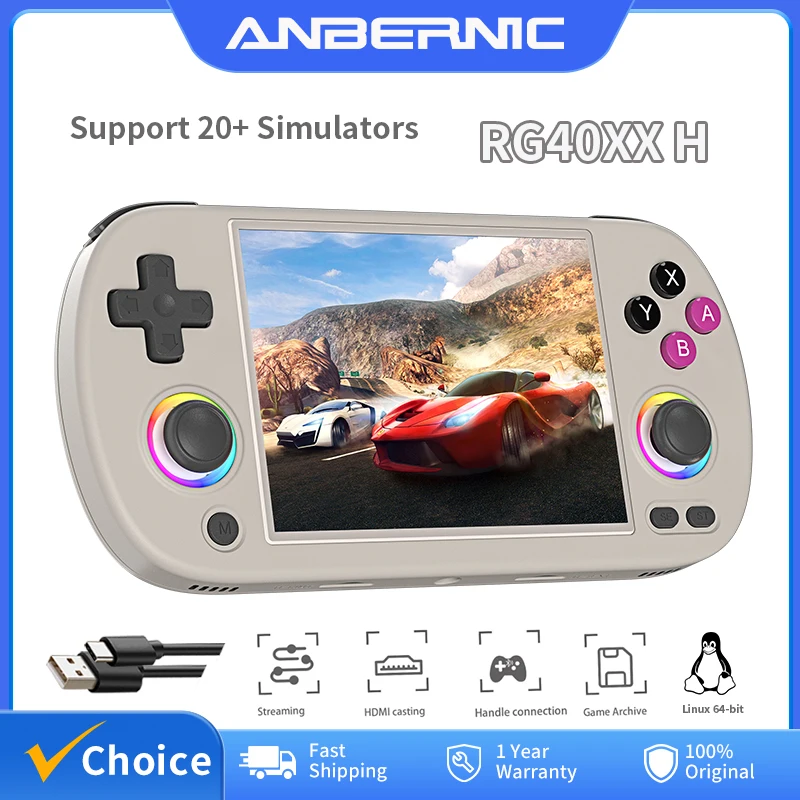
If the standard 3.5-inch screen feels cramped during longer sessions, the RG40XX H steps up to a 4.0-inch IPS panel in a horizontal layout. Powered by 64-bit Linux, it also features multicolor ambient LED lighting rings around the analog sticks for players who prefer a slightly larger visual canvas and modern styling.

Specification Comparison
The table below compares key advertised listing specifications across these five models. Keep in mind that performance depends heavily on emulator optimization and firmware updates.
| Model | Form Factor | Display | Operating System | Advertised Battery |
|---|---|---|---|---|
| RG 476H | Horizontal slab | 4.7" LTPS In-Cell | Android 13 | Not verified |
| RGSP | Clamshell flip | Not verified (flip layout) | Linux 64-bit | 3300 mAh |
| RG35XX H | Horizontal slab | 3.5" IPS | Linux | 3300 mAh |
| RG Cubexx | Square horizontal | 3.95" IPS (720×720) | Linux 64-bit | Not verified |
| RG40XX H | Horizontal slab | 4.0" IPS | Linux 64-bit | Not verified |
What to Verify Before You Buy
Because Anbernic devices are sold across varied official channels and third-party marketplace storefronts, package contents and software configurations can vary significantly. Keep these details in mind prior to completing your purchase:
- SD Card Storage and ROM Partitions: According to Anbernic's official system update instructions, base 16GB firmware configurations often do not permit expanding ROM storage on the primary card. If you plan to carry a large game library, check whether the listing includes a secondary TF/microSD slot or bundles a secondary games card (such as advertised 64GB options).
- Charging Specifications: Vintage handheld emulators rarely support high-wattage USB-PD quick chargers. Check the seller’s manual or listing guidelines regarding input voltage (typically 5V standard charging) to avoid damaging the internal power circuitry.
- Wi-Fi and Bluetooth Inclusion: While devices like the RG Cubexx and RGSP advertise wireless connectivity for streaming or multiplayer, some budget configurations omit wireless modules. Verify that the exact variant you select includes built-in Wi-Fi if game scraping or wireless streaming is vital to your routine.